
The Powerful Impact of the Women’s Business Ownership Act
May 28, 2026
Can you believe there was a time when women could not start their own businesses without a male co-signer?
And surprisingly… it wasn’t even that long ago.
Before 1988, many women struggled to get business loans or funding on their own. In many cases, women needed a husband, father, or even a son to co-sign just to launch a business.
Everything changed when the Women’s Business Ownership Act was passed in 1988. The act opened the door for women entrepreneurs across the United States and helped reshape the future of women in business. What feels normal today, was once something women had to fight for.
What Is the Women’s Business Ownership Act?
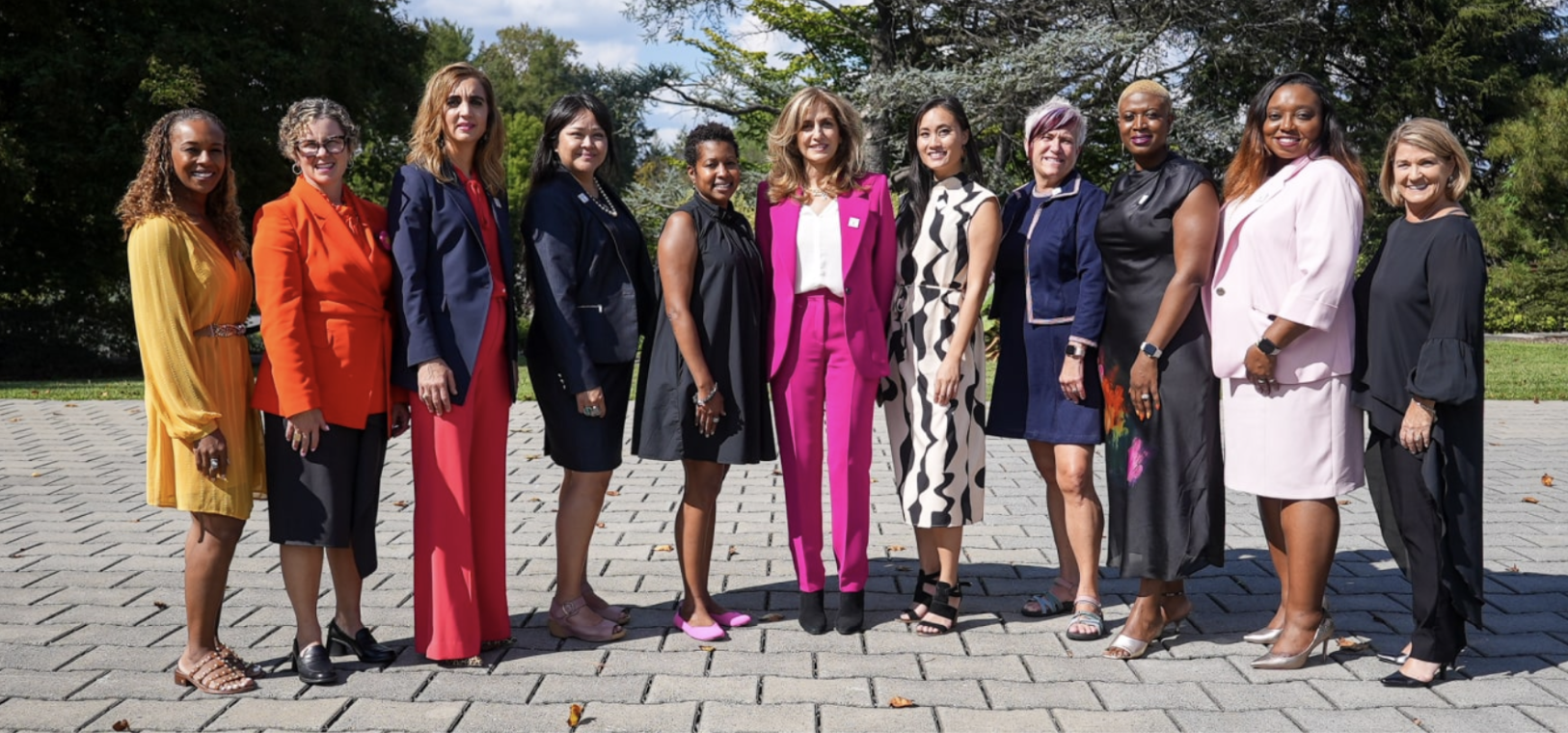
The Women’s Business Ownership Act, also known as H.R. 5050, was written by John LaFalce and signed into law by President Ronald Reagan. The bill was created to support women entrepreneurs and recognize the important role women could play in the economy.
One of the biggest changes created by the act was that women no longer needed a male co-signer to apply for business loans.
That may sound shocking today, but before this law, many women could not access funding on their own. The act helped remove one of the biggest barriers women faced in business.
This bill also allowed the U.S. Small Business Administration (SBA) to support women-led organizations that provide funding, education, and business advice.
The bill also led to the establishment of the National Women's Business Council which analyzes women-owned businesses and builds long-term plans to support their growth in both the public and private sectors.
Challenges Women Faced Before the Act

Prior to the act, women were required to have a male relative as their co-signer when applying for business loans. In some cases, women even used their teenage sons as co-signers because they were unable to qualify solely due to their gender (yes, seriously).
Women who wanted to start businesses also faced unfair financial standards. Many were expected to meet higher financial requirements than men while still receiving smaller loan amounts. Along with financial barriers, women also faced emotional and social discrimination.
Many were not taken seriously in the business world, and even highly qualified women were denied, discouraged, or mocked when attempting to secure loans.
Many banks and business leaders were hesitant on passing the Women’s Business Ownership Act because they believed women lacked knowledge in finance, marketing, and management. Despite these challenges, women continued to advocate for equal rights and worked hard to prove themselves in the business world.
In 1988, multiple agencies carried out studies to examine the environment for women in business. The results showed that women-owned businesses could heavily contribute to economic growth in the United States.
These findings helped show the need for change and supported the introduction of the Women’s Business Ownership Act.
Who Helped Push the Act Forward?
The Women's Business Ownership Act was started by the National Association of Women Business Owners (NAWBO), the first national advocate for women in business.
During the late 1970s and early 1980s, NAWBO members became more involved in public policy and fought for women to have equal opportunities in entrepreneurship.
Virgina Littlejohn, former NAWBO president, said NAWBO is “focused on changing the equation, the ecosystem and long-held perceptions of women in business.” She explained that NAWBO took part in the 1986 White House Conference on Small Business and educated members about public policy issues affecting women entrepreneurs.
In 1988, the House Small Business Committee gave NAWBO multiple days of hearings. To prepare, Littlejohn held a “strategic slumber party” where she and several colleagues stayed up late training speakers and planning media coverage, which is honestly iconic.
Due to the strategic advocacy of NAWBO, the Women's Business Ownership Act was authored by John LaFalce, former New York congressman and advocate for women business owners, and passed by President Ronald Reagan on October 25, 1988!
How the Act Changed Entrepreneurship for Women

After the Women's Business Ownership Act was passed, major changes took place across the United States. Women were allowed business loans without a male relative as a co-signer.
Also, C-Coporations became included in data on women-owned firms by the U.S. Census Bureau. This is important because prior to this, statistics involving women-owned businesses were inaccurate and did not fully show the impact women were making in business.
Another result of H.R. 5050, was the creation of the Women’s Business Center program. These programs are educational centers devoted to helping women entrepreneurs. These centers have helped over 145,000 women, dedicated over 93,000 hours of counseling and conducted over 15,000 training sessions in more than 35 languages.
The Women's Business Ownership Act also led to the creation of The National Women’s Business Council where female business owners report yearly to the President and Congress on relevant policies and program recommendations. Overall, this bill has empowered several women to start their own business and as a result helped grow the economy tremendously.
The Lasting Impact of Women-Owned Businesses Today
The lasting impact of H.R. 5050 on women and the business world continues to grow today. Shortly after the bill was passed, women owned only 26% of businesses in the United States in 1992. Now in 2026, that number has increased to 40%. Since the passing of the bill, women-owned businesses have grown at twice the rate of any other businesses.
A Wells Fargo Report found that in 2026, women owned more than 15.7 million businesses, generated $2.8 trillion in revenue, and employed around 12.6 million workers across the U.S. Additionally, the report showed that women of color are emerging as one of the fastest-growing groups of business owners in the nation.
Women entrepreneurs are continuing to make a major impact on the economy while creating opportunities for future generations. The success of women-owned businesses today reflects the lasting importance of the Women’s Business Ownership Act.
So... Why Does This Still Matter?

Overall, the Women’s Business Ownership Act completely transformed opportunities for women entrepreneurs across the United States. The act helped decrease heavy discrimination, provide assistance and several resources, and remove restrictions that prevented women from pursuing entrepreneurship independently.
As a result, women-owned businesses have grown tremendously and now contribute trillions of dollars to the U.S. economy while employing millions of workers nationwide.
Although progress has been made, women still face challenges in the business world today. A 2026 survey showed that men are three times more likely to get a business loan than women.
The survey also showed that men are more likely to get a loan over $150k than women and there is a 50% loan forgiveness gap between men and women. While there has been progress, there is still clear unequal treatment despite women proving themselves countless times.
Nonetheless, the Women’s Business Ownership Act laid the foundation for change and was a significant moment in history for women. Continuing to support women-owned businesses and fight for equal opportunities can help create a stronger and more inclusive future for everyone.
As Virginia Littlejohn once said, “We must embrace innovation, future-proof our businesses and stay focused on growth. Women entrepreneurs should always stand at the forefront and lead the way to the future.”
🪽 Written by Emma Abdelhamid
join 50k marketing girlies
Private Marketing Girly LinkedIn Group
A private community where young women in marketing network, collaborate, and support each other.