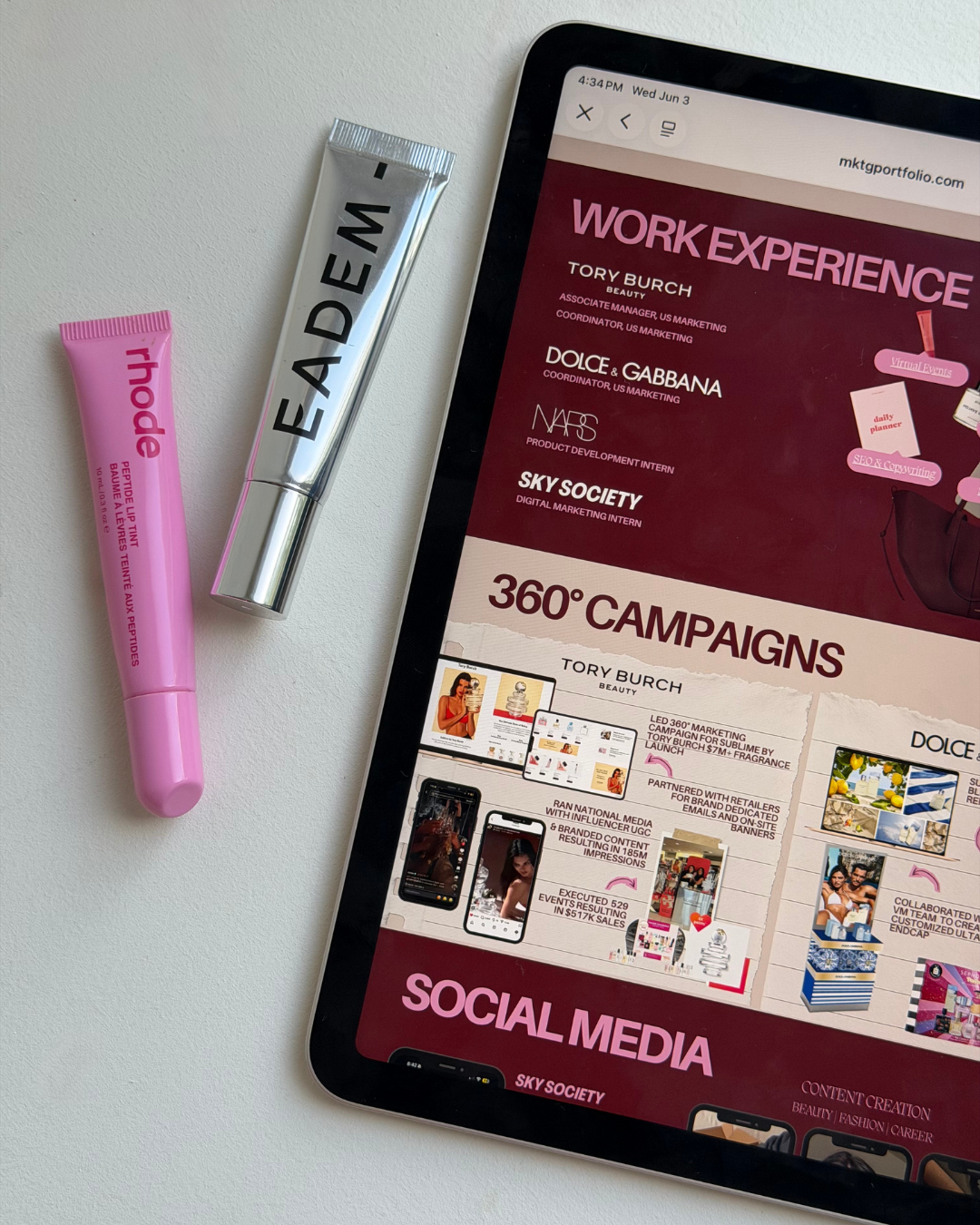

How to Create an Effective Product Portfolio From Scratch
Jul 28, 2026
Fun Fact: 86% of customers research products online first, even if they end up purchasing in-store.
This means that most of their purchasing decisions are affected by what they see online. How can businesses use this to their advantage?
One of the most helpful tools on a business' website is its product portfolio: a complete collection of products or product lines it offers for sale.
Creating an effective product portfolio can increase brand awareness, educate possible customers, and drive conversions. By embracing the brand's identity through creativity and diversity, businesses stand out to customers.
Know Your Audience

Before diving right in, let's take a step back and analyze the big picture.
Ask yourself two questions:
-
What market segments am I targeting?
-
What are their specific needs, and how do I meet overall customer satisfaction?
Understanding the needs of your market segment is critical, because your goal is to offer them a solution.
In her podcast, Passion to Profit, Philippa Craddock shares that knowing your audience shapes your overall business strategy. Decisions for product development and marketing strategies are heavily impacted by different market segments and their overall needs.
Once you understand who you are marketing to and how you can reach them, it makes it much easier to identify gaps in your portfolio and fill them.
Embrace Your Brand's Identity
A brand's identity determines every decision made as a business, from the reply to a comment on social media to the new colors in the next product launch. Whether verbal or visible, they must align with a structured set of core values.
The overarching message every business is trying to send when embracing their brand's identity is:
"This is WHY you should choose us instead of anyone else"
By placing strong values and personalizing every aspect of your business, products are given unique and valuable characteristics. This tells the customer why they should buy the product: because it is not like anything else offered.
A creative product portfolio will clearly display a brand's identity and help them to stand out in a heavily saturated market.
In-store purchasing decisions can be influenced by these online brand personas, connecting emotionally with customers. By creating a unique identity, businesses can build brand loyalty and grow credibility through their community.

Unlock Your Creative Side
What makes your product better than the next? Trying to convince a possible customer can be difficult. Your goal is to demonstrate the unique value and benefits your product provides.
But how can you do that without saying it?
A visually attractive website to showcase your product portfolio can do all that AND MORE if designed correctly.
Some important elements to include are:
-
a LOUD hero image
-
brand storytelling visuals
-
interactive scroll, click, and hover animations
-
confident and bold typography
-
artistic assorted layouts
The goal is to make your products more appealing and visually memorable. This means BE CREATIVE! Don't be afraid to be bold and make a statement; that's the whole point. It can lead to brand remembrance for customers shopping in-store for products.
Diversify and Organize Collections
When being creative with your portfolio, it is important not to make it chaotic and overwhelming. This can cause customers to leave because they cannot easily find what they are looking for and don't feel like putting much effort into a brand they are just learning about.
Including elements like a category navigation or filter bar can improve the overall experience and increase engagement with the products.

A product portfolio not only benefits from good organization, but from offering a wide range of products. Diversifying your product line can target more customer segments, maintain competitiveness in the market, and attract customers.

A few ways you can increase your product offerings are:
-
offer an assortment of sizes
-
introduce new colors
-
launch limited edition items
-
create bundle sets
-
collaborate with other business's/influencers/celebrities
By diversifying your entire portfolio, you can 1. improve existing products and 2. keep up with market trends and adapt to market changes.
Product Portfolio Examples
A helpful strategy for growth potential as a company is to research other businesses' strategic decisions and learn from them. A few examples of businesses with successful product portfolios are:
Apple:
Apple offers a wide range of technology, with something for everyone. They have iPads for kids, MacBooks for students, AirPods for running, and an iPhone for everyone.
Their company offers an assortment of colors as well as sizes for most devices, and accessories can be added to personalize the items. This presentation makes them visually more appealing, and any personalization places an emotional attachment to them, making it "one-of-a-kind."

Glossier:
Glossier is an affordable skincare line that offers a variety of products for all skin types. They have a consistent brand identity built on their philosophy, "Skin first, makeup second," which encourages natural beauty, everyday wear and use, and easy accessibility.
Glossier understands how to offer diversity without an overwhelming or chaotic line of items. Their product portfolio is organized and easy to navigate, with a goal to not stress or tire the customer during the research and purchase process.
Glossier has refined their brands strategy by making every customer feel like a friend. From product launches that feel like an invitation to your best friend's birthday party, to campaigns that feature the same girl you see in the mirror every morning.
When a brand is able to connect with their customers in a way that feels more like a friend group than an email list, they stand out.

Both Apple and Glossier are perfect examples of what it looks like to implement diversity, while still establishing a clear brand identity that resonates with others.
Conduct A Portfolio Analysis
The final step in creating your product portfolio is one you will repeat over and over again: conducting a portfolio analysis. This is how you will determine whether your portfolio decisions were successful or not.
Tracking performance metrics, such as key performance indicators, can show areas of success, as well as opportunities for growth. The most important in this case would be marketing, sales, and customer success metrics. If little to no brand loyal customers are made or conversions are low, it might be your sign to brainstorm a new product portfolio strategy.

SMART is a framework designed to help you decide what KPI's are the best to focus on, based on what you need to know:
S - specific
M - measurable
A - achievable
R - relevant
T - time-bound
A study done by the Manufacturers Alliance found that businesses do not find it beneficial, nor have the time, to track hundreds of KPIs. Instead, they rely on 5-15 metrics to accurately track performance data and meet business goals. Pick a few metrics that help you accurately track your goals and stick with them.
Another helpful way to track effectiveness is customer feedback, which can be just as beneficial. Numbers do not always explain a person's thought process. Gathering information through surveys and reviews helps businesses understand what customers were happy or dissatisfied with.
Both sources of data are key to an effective product portfolio analysis and can help point you in the right direction.
Key Takeaways
Whether it is your first day in marketing or you're the product portfolio manager for a company, these tips will hopefully help you to make strategic decisions that improve the overall value of your products. To recap:
Know your audience. This will allow you to target the right customer segments and meet market demands. You will know which products and services to provide and to whom.
Embrace your brand's identity. Define the core values you want in your business and stay true to them. Customers will view your brand and products as consistent, and translate it into you being reliable.
Unlock your creative side. The most successful business strategies are the ones that stand out from the others. In other words, be the rose in a field of thorns. Bright colors and confident writing will make any product visually more appealing and attract more attention.
Diversify and organize collections. By having a diverse product portfolio that is also easy to navigate, you are able to reach different market segments and satisfy more needs. In such a competitive landscape, it can be hard to market one product and see results. Having an entire portfolio creates more growth opportunities for your business.
Conduct a portfolio analysis. Don't put in so much work just to skip the most important step. Regularly monitor your products and make adjustments when necessary to continue growing. There is always room to improve; don't settle for the bare minimum.
Building an effective product portfolio can be difficult, but the success of brands like Apple and Glossier is proof that it is possible. Do your research, learn from others, and ultimately just have fun with it.
🪽 Written by Lorelei Escobedo
join 45k marketing girlies
Private Marketing Girly LinkedIn Group
A private community where young women in marketing network, collaborate, and support each other.