
How Fenty Beauty's advertising changed Beauty marketing for the better
May 29, 2026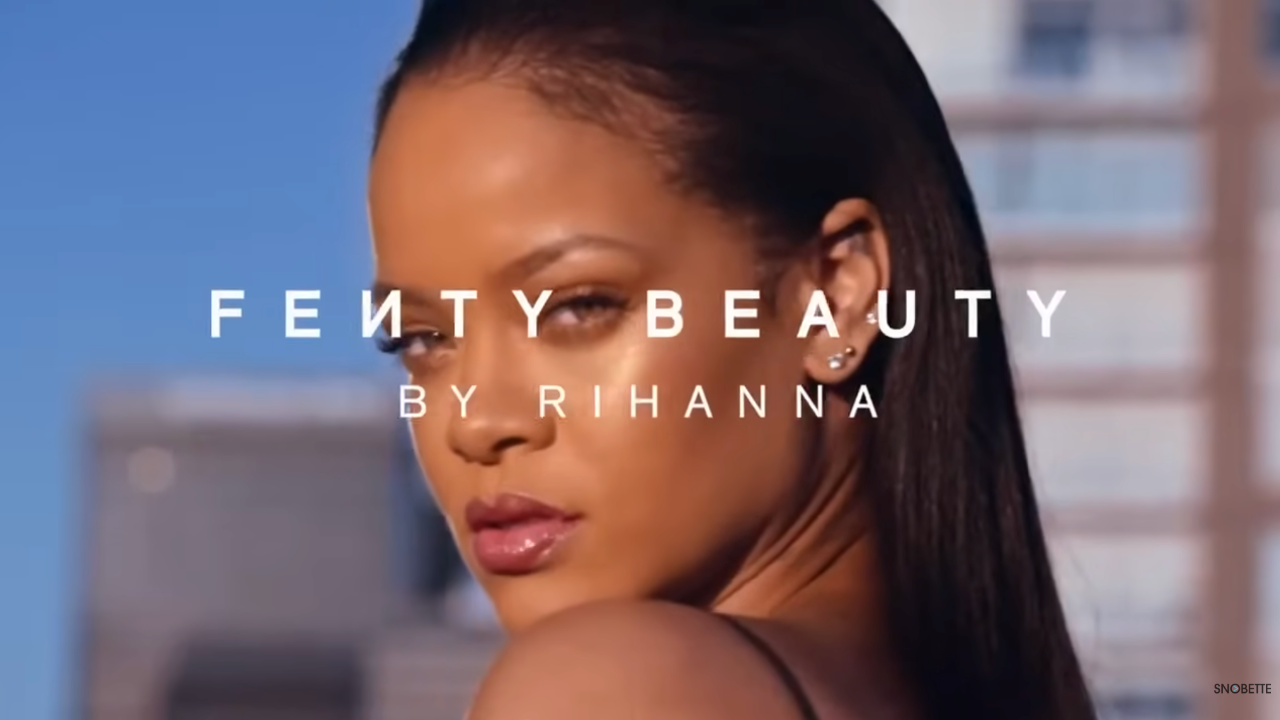
Fenty Beauty officially launched on September 8, 2017, and took the world by storm.
Before the launch, most brands offered minimal foundation shade ranges, typically only up to about 20 shades. Women with deeper skin tones were often not considered in these launches, leaving them to mix products or accept that the launch simply was not for them.
Rihanna made it her mission to ensure women of all skin tones felt included through a combination of inclusive marketing strategies and innovative product development.
Fenty Beauty's advertising revolutionized the beauty industry for the better, and “inclusive beauty” became not just a tagline but a new standard for the industry.
Brands were now expected to consider women with deeper skin tones and provide more diverse shade ranges in foundations and concealers. Let’s break down exactly how Fenty Beauty did it.
Mission and Storytelling: Fenty Beauty's commitment to Inclusivity and Accessibility
Fenty made it their mission to include women of all skin tones through inclusive marketing campaigns and innovative product offerings. The goal was simple yet groundbreaking: Create the most inclusive beauty brand the world has ever seen.
This was revolutionary in the beauty industry. At the time, many brands, especially prestige beauty brands, often disregarded women with darker complexions. Not only was there a lack of products that catered to deeper skin tones, but there was also a lack of representation in advertising and media.
Inclusivity was a term just beginning to circulate in the beauty community, but Rihanna took it and made it the core of her brand, setting the standard for many other brands to eventually follow.
This message was amplified through Fenty Beauty's advertising, beginning with its 2017 launch campaign video.
The video featured a diverse range of models of different skin tones, races, and ages, while also including the face of the brand herself, Rihanna.
The message was loud and clear: “Beauty for all.” This campaign generated massive attention on social media as demands for more representation, inclusivity, and diversity grew within the beauty community. Rihanna met these demands, promising to ensure that everyone, regardless of age or race, felt included and represented.
Inclusive Product Development: Pro Filt'r Soft Matte Foundation
When it comes to celebrity-owned brands, many debut with lip kits, perfumes, or skincare. Rihanna made a bold move by launching Fenty Beauty with the Pro Filt’r Soft Matte Foundation, showcasing the brand’s commitment to product innovation.
The foundation launched with 40 shades, exceeding the industry standard of about 33 shades. In reality, most brands only offered up to 20 foundation shades focused on light to medium skin tones, releasing darker shades later.
The brand, however, made deeper complexions one of the main focuses of the launch. From Fenty Beauty's advertising, visual merchandising, and brand messaging, they highlighted the inclusion of darker skin tones, stocking and selling them in the same fashion as lighter shades.
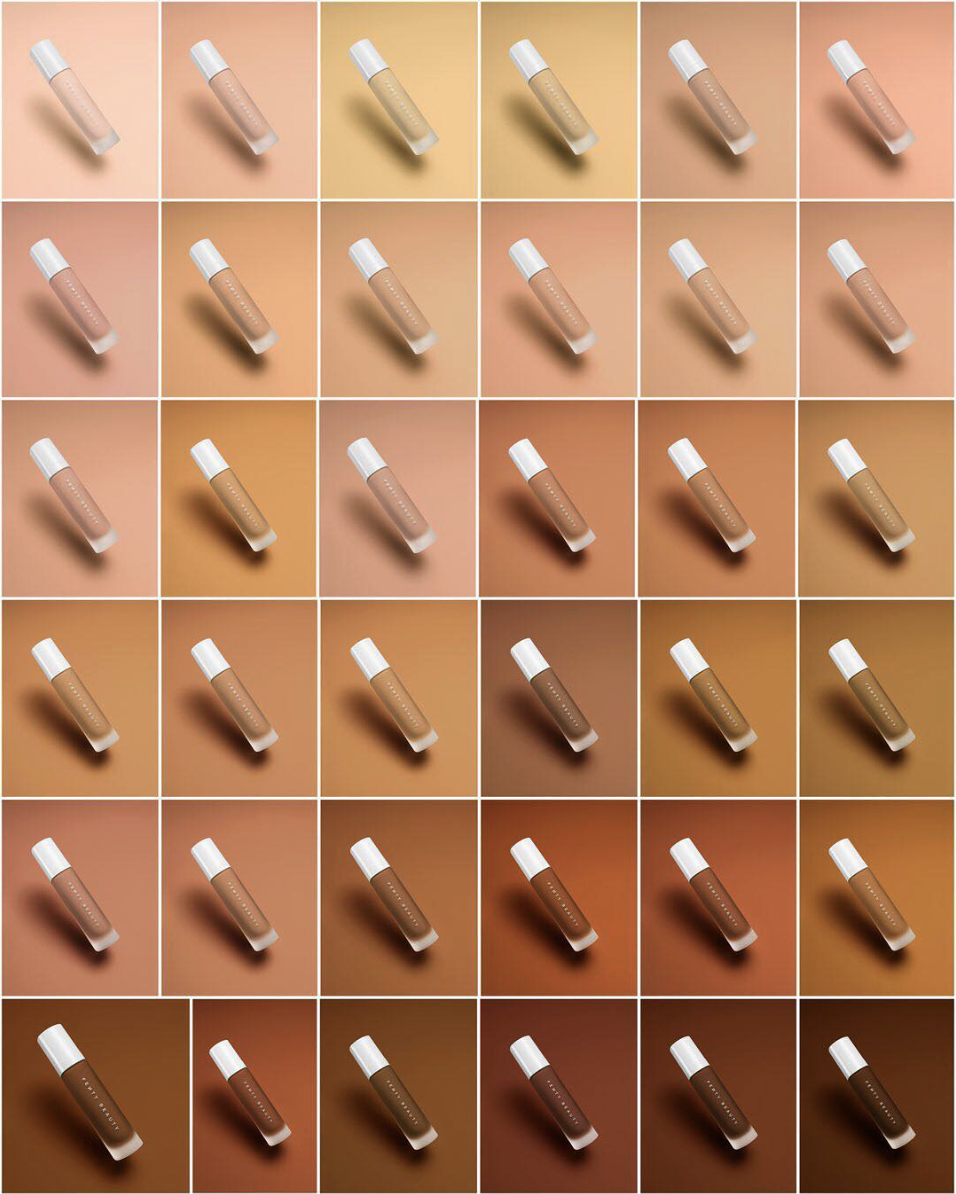
The launch was a massive success. The brand generated over $100 million in sales in the first month. Darker shades were often sold out despite restocks, showcasing the demand for more inclusion and diversity in beauty. Fenty Beauty later expanded its shade range to 50, positioning itself as one of the most inclusive beauty brands in the industry to this day.
The Face of the Brand: Rihanna
Rihanna, as the founder of the brand, does not shy away from promoting Fenty Beauty products. With a massive following of over 100 million followers across platforms, she often posts product demos, personal lifestyle content, and product reviews.
She also makes frequent appearances at the brand’s in-person events and has been featured in several campaigns. Even during her Super Bowl performance in 2023, she was spotted on stage using her Invisimatte Blurring Powder, generating significant attention for the brand.
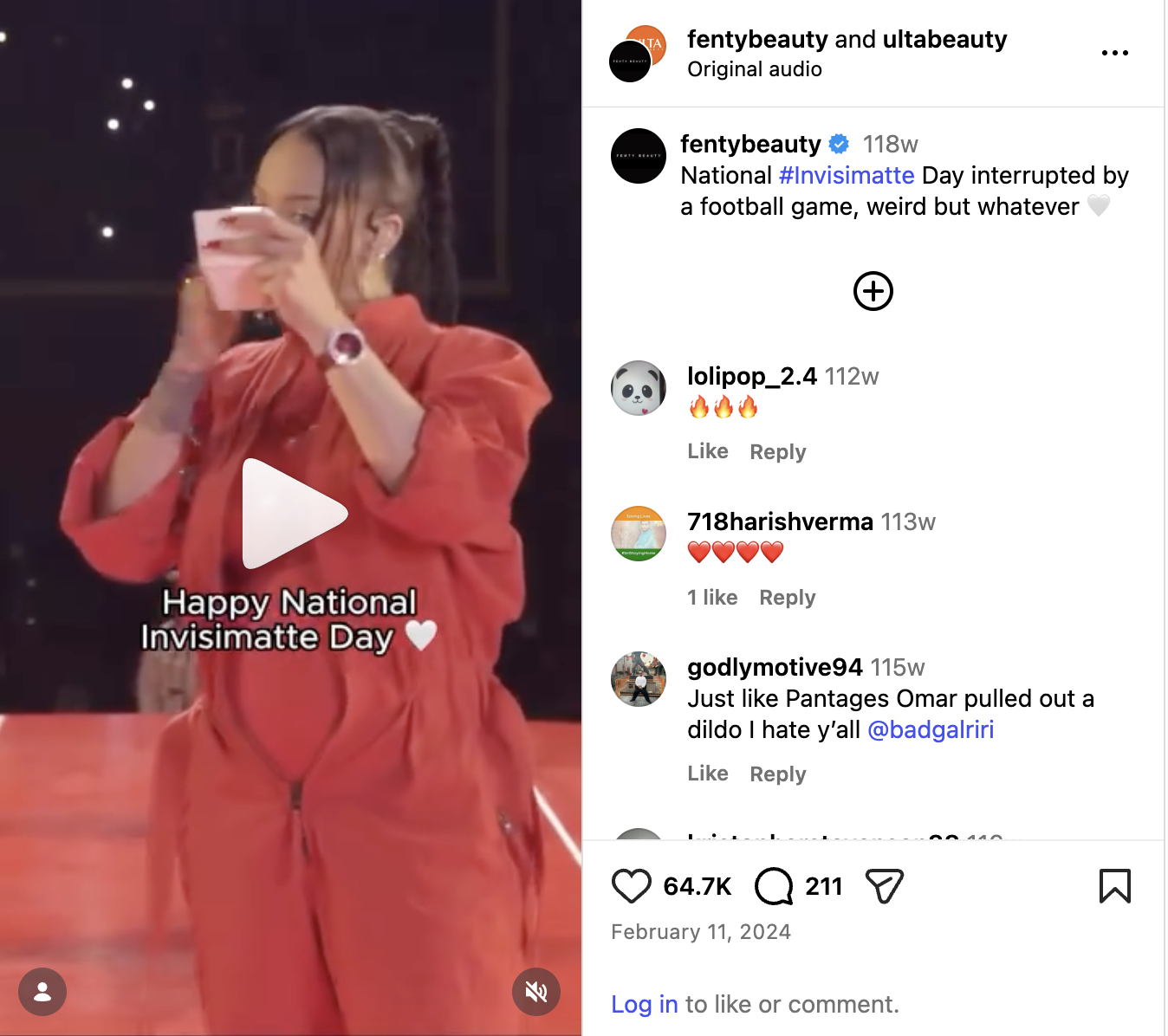
Rihanna’s frequent engagement with her brand and her willingness to share her personal story, along with her interactions with fans and followers, allow her audience to feel personally connected to her and, therefore, more connected to Fenty Beauty.
Her identity, influence, and authenticity are core parts of the brand. When people feel connected to her, they feel connected to Fenty and what it represents. Not only does this generate massive organic reach for the brand, but it also helps Fenty maintain a loyal fan base alongside Rihanna.
However, while Rihanna’s celebrity status does generate attention, Fenty Beauty’s marketing does not rely solely on her. To connect with everyday users, the brand focuses on representing real people in its marketing campaigns as well. This is where social media and influencers play a major role.
Social Media Movement and Influencer Engagement
While many brands focus on partnering with high-profile influencers, Fenty Beauty chose to engage with a broader range of content creators, including beauty enthusiasts, makeup artists, and skincare influencers. The commitment to diversity was reflected not only in their marketing and product innovation but also in the community they partnered with.
One of Fenty’s key social media strategies involved creating viral moments powered by user-generated content. One example was the #SoStunna TikTok Challenge, where users shared their makeup transformations wearing Fenty Beauty’s Stunna Lip Paints.
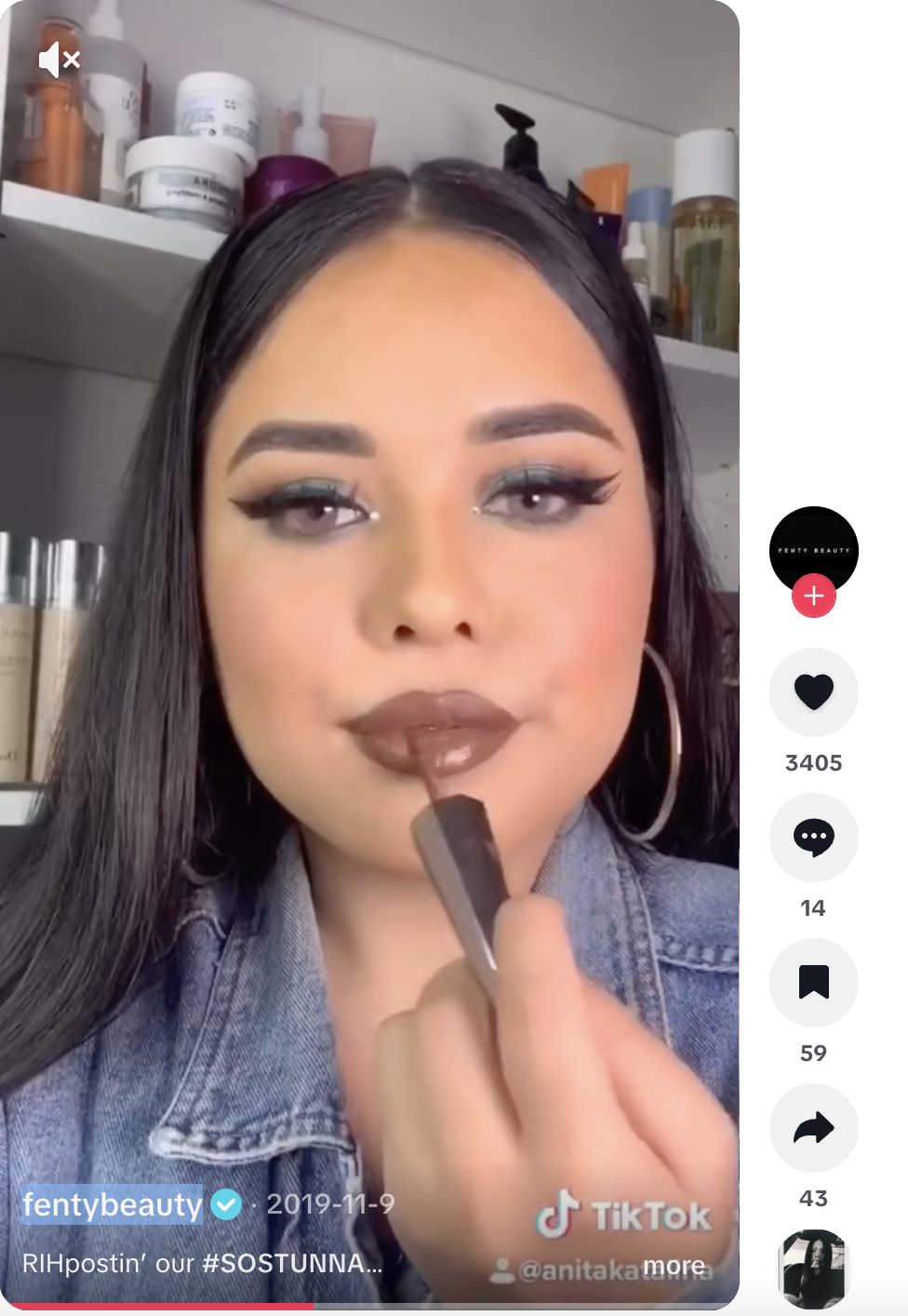
Gaining over 6.1 million views, the challenge allowed Fenty to reach a broader demographic by creating a community experience that anyone could engage with. Fenty’s engagement with the challenge in reposting many user transformations helped the brand feel more relatable and welcoming to everyday users.
This also helped showcase micro-influencers, whose content became a key driver of sales and positive brand sentiment.
Additionally, Fenty’s approach to influencer marketing centered on treating influencers as collaborators, not just promoters. Partnering with over 1,000 influencers, many were invited to brand launches and featured in brand content.
Experimental Marketing and Retail Strategy
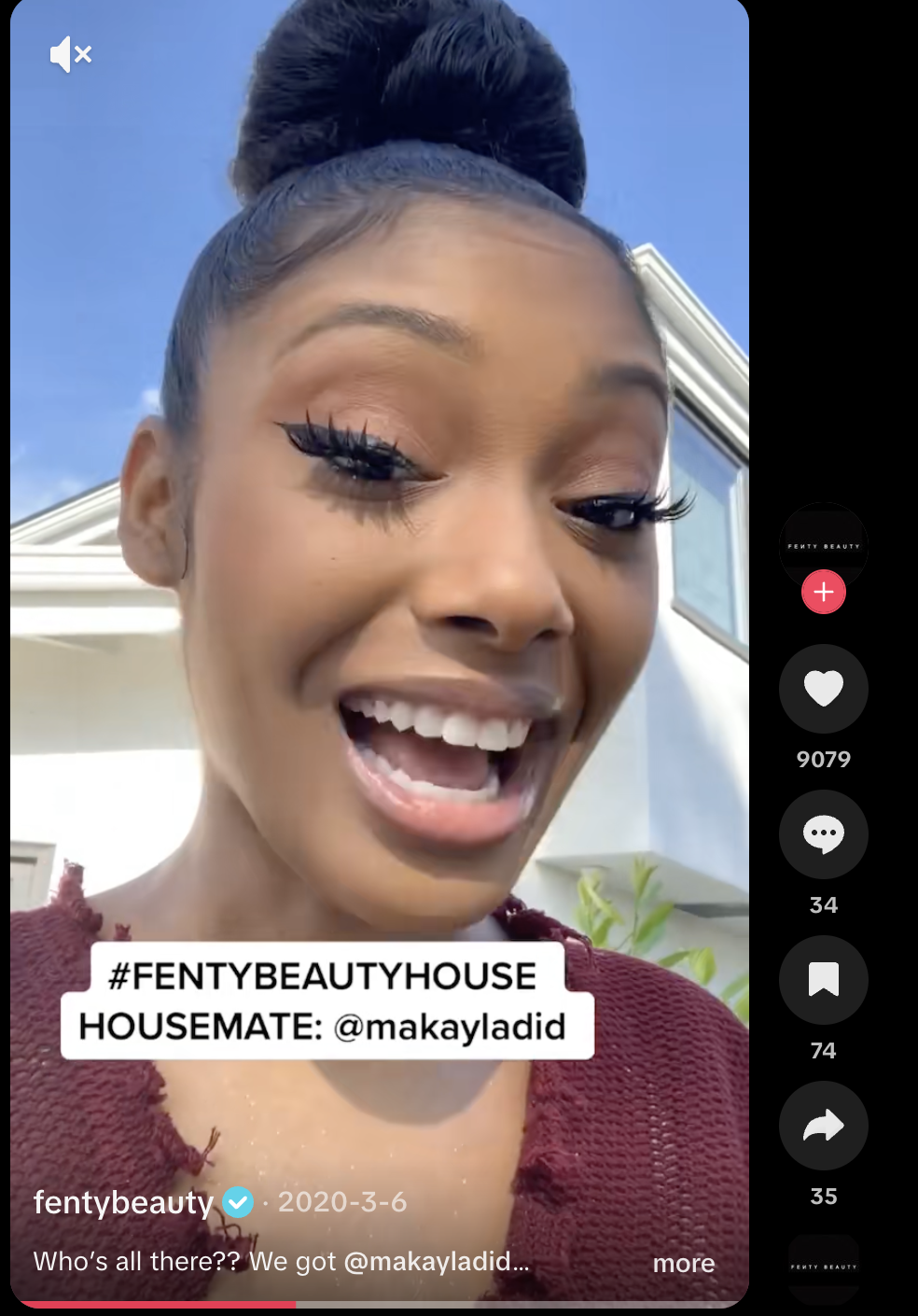
Fenty Beauty’s advertising is no stranger to experimentation. In 2020, the brand created the Fenty Beauty House, where TikTok influencers were invited to create content at a Los Angeles mansion. This strategy garnered significant attention and organic engagement, with major outlets such as Harper’s Bazaar and Business Insider covering the event.
This helped maintain Fenty Beauty’s prestige positioning in the beauty world.
When it comes to retail strategy, the main focus was “approachable luxury.” Fenty priced its foundation at $35, while most luxury brands priced theirs between $40 and $60. The brand’s message was clear: “If you say you’re for everyone, you can’t price like you’re for the few.”
This aligned with Fenty Beauty’s mission to make everyone feel included, not just in marketing, but in accessibility.
Their distribution strategy followed the same tone. From being sold exclusively at Sephora and Harvey Nichols, Fenty later expanded to Ulta Beauty, Boots, and more than 137 countries.
The "Fenty Effect" on the Beauty Industry
Since Fenty Beauty’s legendary launch, the beauty landscape has shifted dramatically. From drugstore brands to prestige brands, many scrambled to launch more extensive shade ranges in their foundations and concealers.
40 shades became the new standard, with some brands launching up to 100 shades. Fenty Beauty highlighted the importance of inclusive beauty; it was no longer a trendy word used to create buzz but a standard for the beauty industry to follow.
However, while Fenty Beauty's advertising showcased diversity in every part of its branding, some brands still struggle to keep up. Brands like Beautyblender and Youthforia attempted to follow the newly set standards, only to face controversy over inaccurate shade ranges and a lack of representation.
Diverse representation in beauty marketing still falls flat for some brands, but what has shifted is consumer expectation. Customers are now quick to spot disconnects when it comes to inclusivity. Inclusive beauty is no longer revolutionary; it is expected.
🪽 Written by Rachel Hoang
join 50k marketing girlies
Private Marketing Girly LinkedIn Group
A private community where young women in marketing network, collaborate, and support each other.