
7 Steps for a Marketing Plan When You're New
Oct 07, 2026
Sometimes, becoming the marketing person happens before actually feeling like a marketing expert.
Maybe marketing is technically part of the job description. Maybe it started with a simple, “Can you take over our Instagram?” Either way, suddenly there is a website to update, ad campaigns to optimize, social media to manage, and a business owner asking why a campaign did not bring in any leads that week.
Welcome to marketing for a small business.
Being the only marketing person can feel daunting, especially when there is no marketing team to provide strategy, templates, or answers. But a marketing career does not have to start with knowing everything. Sometimes, it starts with knowing where to begin.
For anyone who has suddenly found themselves in charge of marketing, especially early-career marketers and people stepping into informal marketing roles at small or family-owned businesses, this guide walks through business goals, customer research, channel selection, inbound and outbound strategy, SEO basics, and measurement to help a marketing plan actually work.
Step 1: Understand the Business Before Building the Marketing Plan
The first thing a new marketer should do is slow down.
It can be tempting to jump straight into creating Instagram posts or launching a new ad campaign. But before doing any of that, the first step is to understand the business.
That sounds obvious, but it is easy to skip, especially when a new marketer is juggling a lot of responsibilities. A marketer can spend hours creating content without knowing what the business actually wants that content to accomplish.
Start with the basics. What does the business sell? Who actually buys it? What makes the business stand out from its competitors? Where do current customers come from? Which products or services are the biggest priorities?
For example, a small, family-owned custom jewelry business may prioritize getting more people to book a virtual or in-person consultation.
That changes the way marketing is approached.
Instead of only thinking about getting more Instagram followers, the focus also shifts toward getting the right people to discover the business, visit the website, learn more about its products and services, and eventually book a consultation.
A marketing plan should connect marketing activities to actual business goals. Mailchimp's marketing plan guide recommends defining goals, audiences, channels, timelines, and key performance indicators when building a marketing plan.
The first of the steps for a marketing plan is simple: understand what the business actually needs before deciding what marketing it should do.
Step 2: Figure Out Who the Business is Actually Trying to Reach (Target Audience)
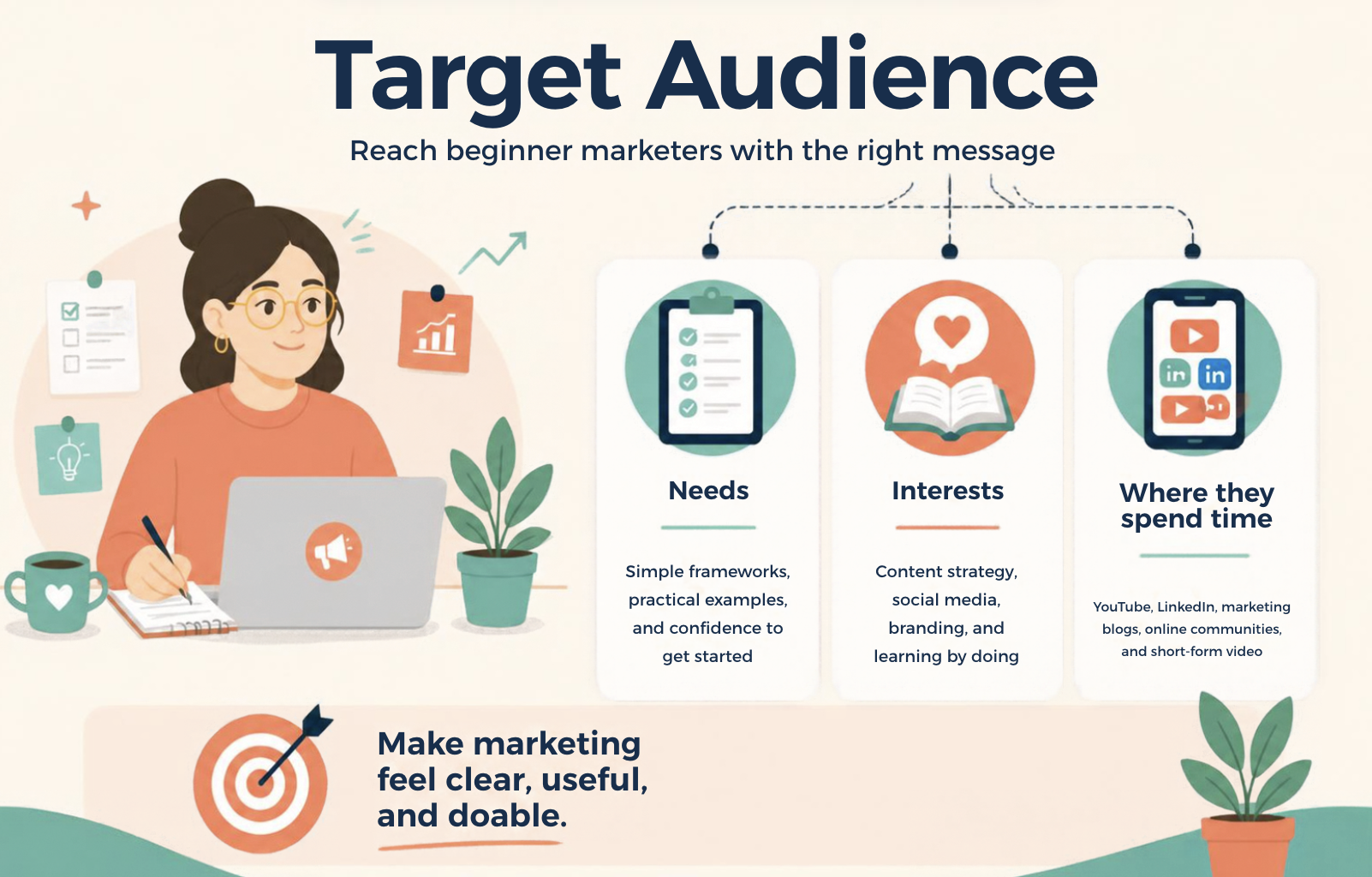
Once there is a better understanding of the business, it is time to look at the customer.
“Everyone” is not a target audience. Marketers need to identify their target clearly, because even if almost anyone could technically buy from a business, that does not mean everyone should receive the same message.
A beginner marketer can start by looking at current customers. Who makes the most purchases? Who asks the most questions? What problems are customers trying to solve? What makes them choose this business instead of a competitor?
For a custom jewelry business, someone looking for a custom engagement ring has different expectations from an existing customer looking for wedding bands, anniversary gifts, or jewelry repairs.

The engagement ring customer may want educational content about diamonds, ring styles, budgets, and the buying process. A previous customer may respond better to content about jewelry care, new collections, or anniversary gifts, so each group needs targeted messages.
This is where marketing starts to become less about “posting on Instagram” and more about understanding people.
One of the advantages of working in a small business is that the customer can often be much closer to the marketer. A salesperson might hear the same customer question every week. An owner might know exactly why target customers choose the business. A customer review might reveal something that the marketing team had never considered.
Those conversations can become marketing insights into customer behavior.
Instead of guessing what potential customers want to see, the marketer can start paying attention to what customers are already asking for.
That makes the steps for a marketing plan much more practical because the strategy is built around real customers instead of assumptions.
Step 3: Choosing a Few Marketing Channels Instead of Trying Everything
This is probably one of the easiest places for a new marketer to become overwhelmed.
There are so many options, and different plans serve different purposes within digital marketing.
Instagram. TikTok. Facebook. Pinterest. Email marketing. SEO. Google Ads. Influencer marketing. Blogs. Events. Direct mail.
It can feel like every business needs to be doing all of them.
It doesn’t.
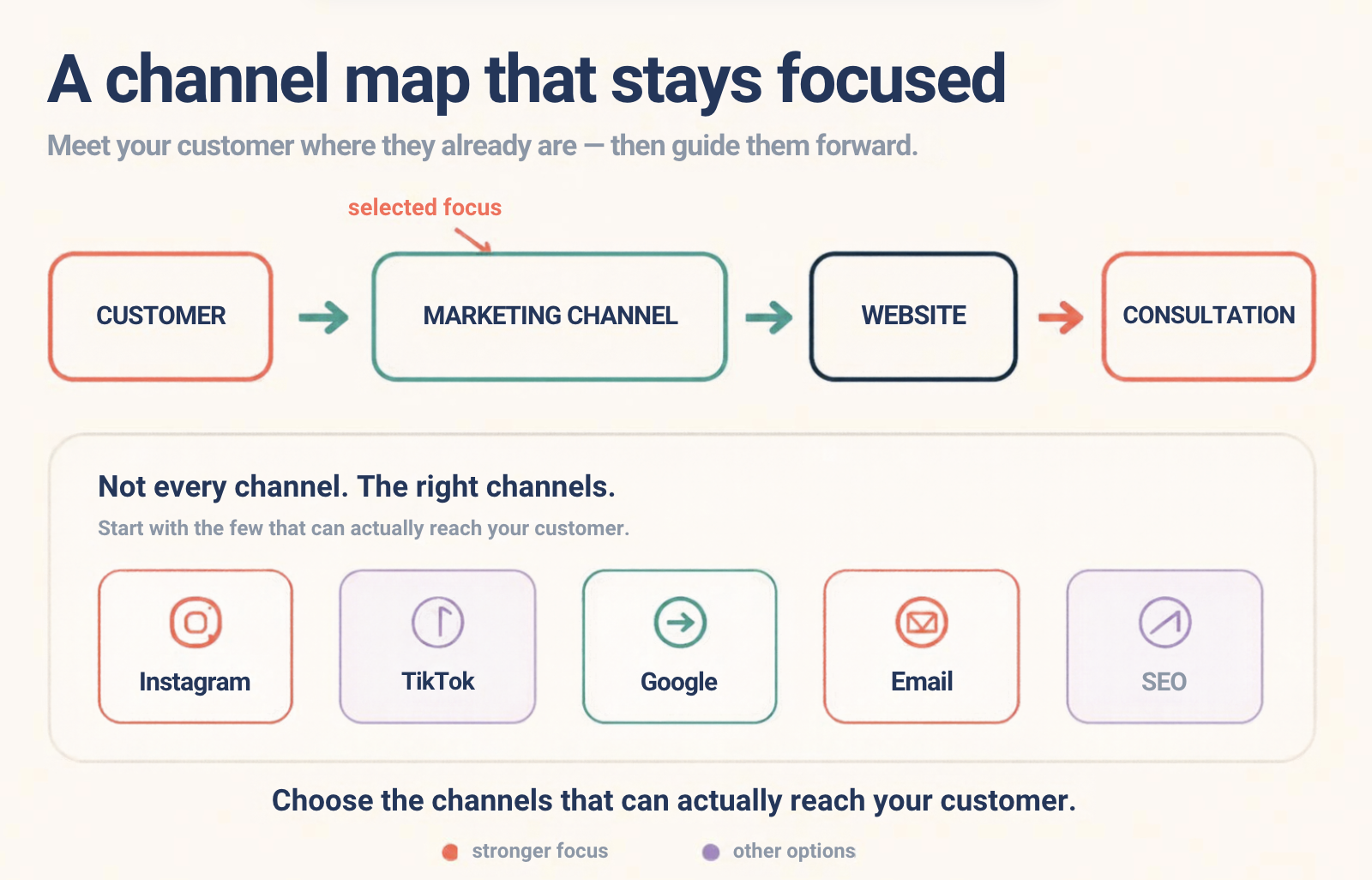
A small business needs to figure out where the target customer is and choose a few channels that it can realistically maintain.
For a jewelry business, Instagram and TikTok can be useful because jewelry is highly visual. SEO can help people find the business when they are actively searching for jewelry. Email can help the business stay connected with prospective and existing customers.
Google Ads may also make sense when the goal is to reach people who are already searching for a specific product or service.
That does not mean the business needs to immediately launch a TikTok strategy, start a podcast, create a blog, send weekly emails, and become active on every social platform.
A smaller strategy that can actually be maintained is more realistic. Mailchimp's small business marketing strategy guide similarly recommends defining goals, understanding customers, choosing the right channels, and focusing on resources where they can have an impact.
One of the most important steps in a marketing plan is deciding what the business doesn't need to do.
Step 4: Understand Inbound vs Outbound Marketing
Once the channels are chosen, it helps to understand how inbound and outbound fit into a broader strategic marketing approach.

Inbound marketing focuses on attracting people through things like SEO, blogs, social media platforms, and useful content.
Outbound marketing is more focused on putting a message in front of an audience through tactics such as paid advertising, sponsored content, and direct outreach.
HubSpot's guide to inbound and outbound marketing explains the difference between earning attention through valuable content versus reaching an audience through paid advertising and direct outreach.
Neither approach automatically makes sense for every business.
For example, a jewelry business could use inbound marketing by creating a blog post answering common questions about buying an engagement ring. Someone searching for that information could discover the business through Google.
At the same time, that business could use outbound marketing through a Google or social media ad promoting engagement ring consultations.
The important thing for a beginner is understanding why a strategy is being used and how it connects back to the business goal.
It is easy to get caught up in the question, “What should we post?”
A better question is, “What are we trying to accomplish, and which strategy can help us get there?”
That mindset is one of the most useful steps for a marketing plan because it moves the marketer from simply completing tasks to actually thinking strategically.
Step 5: Learn the SEO Basics Without Trying to Become an SEO Expert Overnight
SEO can seem intimidating when someone is already responsible for social media, email, and everything else.
But learning SEO does not mean becoming an expert overnight.
A beginner can start with the basics.
What are customers searching for? Are there search opportunities tied to market trends, industry trends, and the competitive landscape? Are the important pages on the website easy to understand? Do the page titles accurately describe what is on each page? Is the website answering questions customers actually have? Can someone easily find the information they need?
For a local jewelry business, this could mean creating useful content around topics customers are already searching for, such as how to choose an engagement ring, what to know before buying a custom ring, or what to expect during a jewelry consultation, which can build brand awareness and improve customer engagement.
Google's SEO Starter Guide is designed for people who are new to SEO and covers the basics of helping search engines crawl, index, and understand website content. Google also emphasizes creating useful, people-first content instead of focusing on tactics like keyword stuffing.
SEO also requires patience.
Unlike a paid campaign, where a marketer can often see performance data relatively quickly, organic search can take time to build. Google notes that changes to a website can take anywhere from a few hours to several months to show an effect on search results, so marketers should give changes time before deciding whether they work.
The goal is not to learn everything about SEO immediately.
The goal is to keep learning enough to make better decisions. SEO changes should leverage data from tools such as Google Analytics to evaluate campaign performance over time.
Step 6: Build a Simple Plan, Define Marketing Objectives, and Measure What Matters
After understanding the business, customer, channels, and strategy, the marketer has enough information to start building an actual plan as a strategic document within the marketing planning process.
This is where the steps for a marketing plan become much easier to visualize.
A simple plan could look something like this:
Business goal: Increase custom jewelry consultations.
Target market: People looking for a custom engagement ring or other personalized jewelry.
Primary channels: Google, Instagram, TikTok, and SEO.
Marketing budget: Planned spending by channel with a detailed budget that allocates financial resources across priorities.
Content strategy: Educational content, custom jewelry features, customer testimonials, and FAQs.
90-day goal: Increase consultation bookings by a measurable amount.
Metrics: Website traffic, consultation bookings, impressions, click-through rate, and conversions.
Developing a marketing budget is essential for resource allocation, should be based on expected ROI from marketing campaigns, and helps prevent overspending.
The exact numbers will depend on the business. A 60% increase, for example, should only be used if it is based on the business's current performance and is realistically achievable.
It does not need to be a complicated 40-page document. An effective marketing plan often includes about eight key elements, such as goals, audience, channels, tactics, budget, timeline, and measurement.
The plan simply needs to answer a few important questions: What are we trying to accomplish? Who are we trying to reach? What are we going to do? And how will we know whether it worked?
This is also where it becomes important to separate activity from results.
Posting five times a week is an activity.
Getting more consultations because of those posts is a result.
Getting more followers might be exciting, but if those followers are not part of the target audience or are not engaging with the business, they may not help the larger goal.
Mailchimp's marketing plan resources recommend using KPIs and metrics to track marketing performance and make adjustments as a campaign progresses.
A marketing plan should not be something that gets created once and then forgotten.
Regularly reviewing it helps keep marketing efforts aligned with business goals, and effective budget allocation can maximize return on investment.
It should change as the marketer learns more about the business, the customer, and what is actually working.
That flexibility is especially important for someone who is still building their marketing expertise, so budgets should be reviewed and adjusted as market changes occur, including shifts in marketing spend.
Step 7: Build Trust Before Trying to Change Everything
Here is the part that most marketing tutorials leave out.
Sometimes the hardest part of being the marketing person is not learning SEO or social media. It is working directly with the people who own the business.
Especially at a family-owned business, there may be years of experience and established ways of doing things. The owners may have a strong understanding of their customers and what has worked for them in the past.
That experience should not be ignored.
At the same time, a new marketer may see opportunities to try something different.
That can create a difficult balance.
It can be tempting to walk in and want to change everything immediately. Maybe the website needs work. Maybe the social media strategy needs to change. Maybe the business needs SEO. Maybe there should be an email campaign.
But trying to fix everything at once can make it harder to build trust.
Instead of completely replacing the existing strategy, test one new idea and put more resources behind the approaches that show the clearest competitive advantage.
Instead of promising that a new campaign will transform the business overnight, set a realistic timeline and explain what will be measured.
Small wins can go a long way.
Test one idea. Track the results. Share what happened. This is how marketing leaders evaluate marketing plan performance and decide where to increase sales or expand the customer base. Then use that information to make the next decision.
If a new blog post brings in search traffic, show the data. If a social media post leads to a customer inquiry, share the result. If an email campaign gets strong engagement, explain what worked.
The goal is not to prove that the new marketer knows more than the business owner.
The goal is to show that a marketing plan helps achieve business goals by connecting actions to results.
That trust can make it much easier to introduce new ideas later.
Start Small, Learn, and Build From There
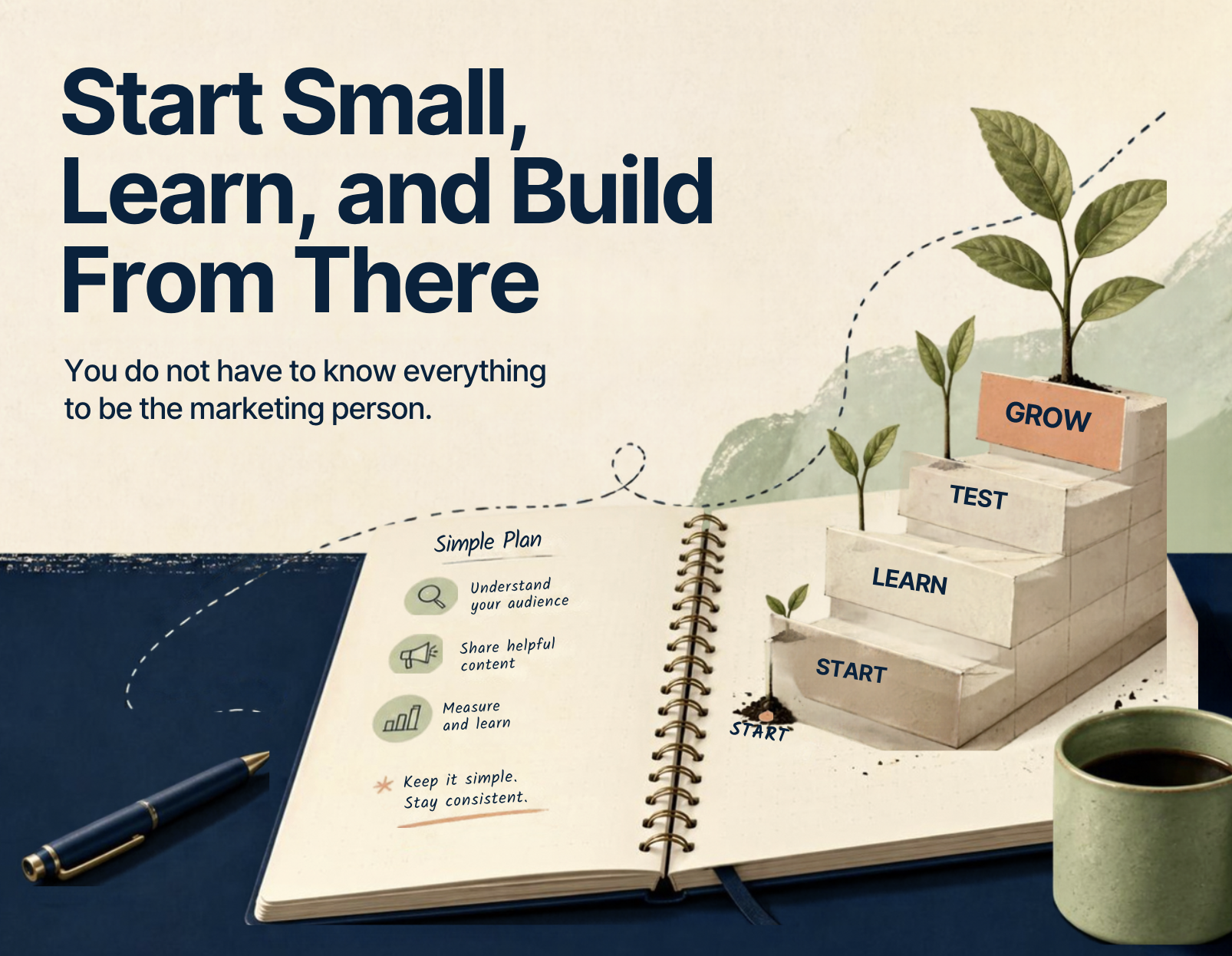
Building a marketing plan is not about getting everything right the first time. Especially when you are the only marketing person, the goal is to create a starting point that can grow as you learn more about the business and its customers.
Start by understanding the business and its goals. Get to know the target audience, choose the channels that make sense, and understand how inbound, outbound, and SEO can support the overall strategy. Then turn those insights into a simple plan with clear goals and metrics that help you understand what is actually working.
But as you build that plan, remember that marketing is also about building trust.
You may not have the experience of the business owner or know exactly what will work from the beginning. That is okay. Test an idea, measure the results, share what you learn, and use that information to decide what to try next.
Over time, those small tests can turn into a marketing strategy that is based on real data instead of assumptions.
You do not have to know everything to be the marketing person. You just need to be willing to ask questions, keep learning, and take the next step.
So if you have suddenly found yourself responsible for marketing, start with these seven steps. Pick one area to work on, create a simple plan, and build from there. The more you learn about the business, the customer, and what actually works, the more confident you will become in your role as a marketer.
🪽 Written by Michelle U.
join 50k marketing girlies
Private Marketing Girly LinkedIn Group
A private community where young women in marketing network, collaborate, and support each other.