
4 Reasons You Need to Focus On Your Brand Positioning Strategy
Oct 01, 2026
In today’s digital world, brands can struggle to stand out in a huge pool of companies offering similar products or services.
To develop a strategy that helps you stand out and attract customers, you must consider how you position yourself as the leading voice in your industry.
Brand positioning stems from companies identifying their unique selling point (USP) to differentiate themselves from others. With Amazon, for example, they consider questions such as who their target audience is, what they are trying to sell, and how the company's values align with those of their customers. In turn, this creates an “internal positioning strategy” that can be applied at all times when developing campaigns, products, and anything that represents the company, ensuring it continues to stand out.
In other words, it's important to understand what makes your brand unique, what your customer wants, and how you can get them to choose your product over another company’s. In this blog post, we will dive into 5 key reasons your company must review its brand position to maximize sales and customer acquisition.
1. Establishing a Brand Position Sets You Apart from Competitors
As we established, brand positioning is a value or statement that sets a company apart in its industry. In a world with an enormous number of companies offering similar products, what sets you apart becomes central to your strategy.
Let's take Dyson and Shark, for example. These two companies offer similar products: vacuum cleaners, styling tools, and other appliance-related products. For this case, we will focus on their popular airwrap hair styling tools.
These two products from each company have revolutionized how people can style their hair in minutes with low effort. Anne, for example, describes these products as offering salon-like styling without leaving your house. These tools have revolutionized at-home hair styling with a super easy-to-use system.
However, one of the biggest differences between the two products is price. While Shark offers their styling tool for $349, Dyson’s Airwrap costs a whopping $650. So, we have two nearly identical products with a huge price difference. This is where brand positioning helps a company stand out.
To justify its pricing, Dyson needs to overdeliver to convince people to buy the Airwrap. However, some people feel its durability doesn't match the price. Some people say it breaks within 1-2 years, while others comment on the tool's effectiveness and say it doesn't provide long-lasting styling results.
However, Shark’s Flex Style offers many of the same styling options as Dyson, but the biggest difference is the price. Some opinions say both products produce the same result, so they recommend the Shark Flex Style solely for the price. Other commentators explain their decision to stick with the Dyson.
This shows that both companies know what positioning they need to take to compete. Dyson might focus on heat settings and hair protection, while Shark focuses on curl definition and price advantage. It shows that understanding how your brand (more than just its products) can position itself gives you an advantage over competitors.
2. You Will Be Perceived As The Leading Voice In Your Niche
Following what keeps you above your competitors, the definition of brand positioning also leads to your company being seen as a leading voice. As we noted earlier, understanding how you position your brand helps you become known in the industry as a company that knows what it's talking about.
Brand positioning builds authority in public perception, which ultimately gives you more control over customers' purchasing power. Once customers recognize you as the source, they're more likely to buy your products.
In our previous case study, both Dyson and Shark are well-known brands for their household appliances, apart from their styling tools. When your vacuum cleaner breaks and you head to the store, you're more likely to buy from either brand because they are well known and trusted.

3. Brand Positioning Definition Leads To The Creation Of The Brand Culture
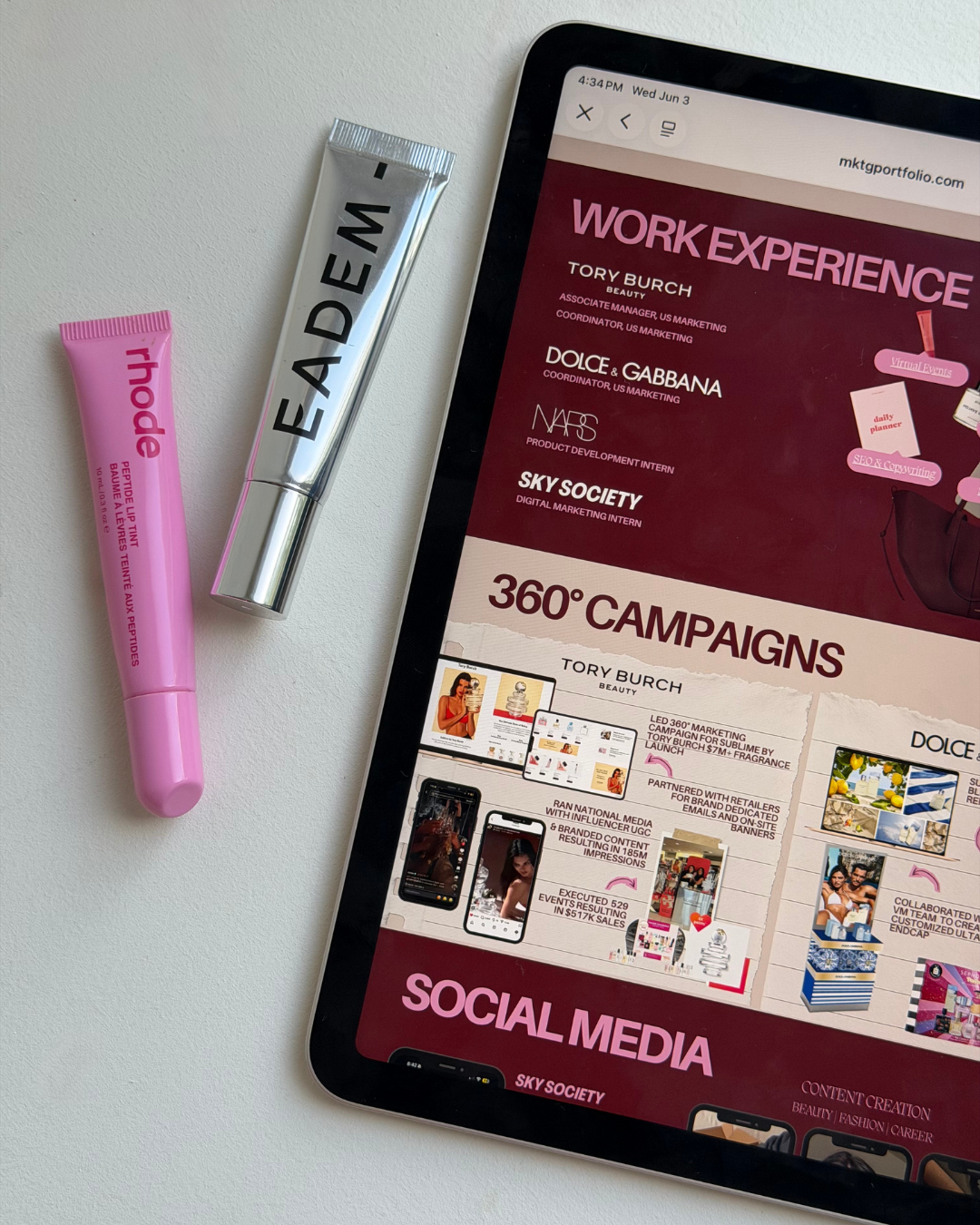
Let’s take Hailey Bieber’s Rhode for example. When it first launched, Rhode was teased as the must-have for the clean girl aesthetic, mainly because of who their founder was and how she did her makeup.
Rhode drove this desire not necessarily to look like Hailey, but to embody the clean girl. It created a world around the clean girl even before it launched its products. So, people started to understand what the brand culture was about, what their clear positioning was. When they launched products, no one was surprised by the product type, but they sold out quickly.
This shows that defining your brand positioning (for Hailey, the “clean girl”) creates a culture people want to belong to. People who identify with the clean girl will purchase Rhode products because they identify with the aesthetic.

4. Understanding Brand Positioning Will Lead To Clear Strategy Creation
When thinking about how we define brand positioning, as mentioned above, we ask who our target is, what we're selling, what values we want to be perceived for, and so on. The definition of brand positioning is just that: creating the system, the archetype of what your company is.
When we have a clear view of the company model, we return to it whenever we run campaigns through social media or ads. We return to who our target is; we ask: are we sure we are speaking to them? This creates the backbone of the company, and no matter which direction you take, you still communicate with the right customer at the right time to increase sales.
So, as a brand, what can you do?
Start asking the questions that will lead to a clear brand position. This will, in turn, give your target audience a clear picture of who you are and why you do what you do. Reflecting on these four key points will create the differentiator you need as brand managers to bring your product or service to mind when consumers decide what to choose. Create the culture, even better, the world of your brand to go above what consumers think and make them feel part of something bigger.
🪽 Written by Ana P. Bauzá
join 45k marketing girlies
Private Marketing Girly LinkedIn Group
A private community where young women in marketing network, collaborate, and support each other.